
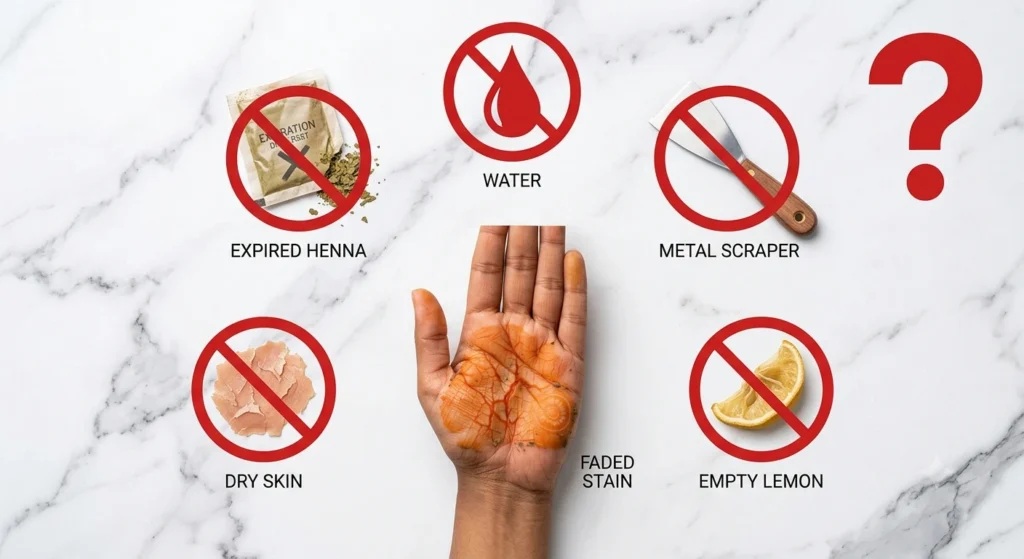
Mehndi is more than just a beautiful art form—it’s a celebration of culture, tradition, and joy. But there’s nothing more disappointing than applying stunning mehndi designs, waiting hours for it to dry, and then ending up with a light orange or pale stain.
If you’ve ever wondered, “Why doesn’t my mehndi turn dark?” —you’re not alone. Many people face this frustrating issue.
The good news? It’s not your mehndi’s fault—it’s all about how you prepare, apply, and care for it.
Let’s dive into the reasons why mehndi doesn’t turn dark and the secret tips to fix it!
Why Doesn’t Mehndi Turn Dark? 5 Common Reasons
1. Poor Quality Mehndi Powder
Not all mehndi powders are created equal. Cheap or expired powders often contain fillers, chemicals, or poor-quality henna leaves. This results in weak stain and less color payoff.
Solution: Always buy 100% natural, fresh henna powder from a trusted brand.
2. Incorrect Mixing or Oil Imbalance
The key to dark mehndi is the perfect paste consistency and ingredients. If you add too much water or essential oils, the paste won’t release enough dye.
Solution: Mix mehndi with lemon juice and eucalyptus or lavender essential oil—never plain water. Keep the paste thick like frosting, not runny.
3. Not Letting the Paste Rest
Freshly mixed mehndi needs time to release dye. This is called dye release. If you use it immediately, the color will be weak.
Solution: Let the paste rest for 6–12 hours in a warm place before use. You’ll see the color change from green to dark brown—that’s the perfect time to apply.
4. Skin Temperature and Body Heat
Mehndi reacts with body heat. People with cooler body temperatures often get lighter stains.
Solution: Apply mehndi in a warm room, and after application, keep your hands warm using cloves, warm air, or sunlight (indirect).
5. Washing Off Too Early
Scratching or washing off the mehndi before it’s fully dried can ruin the stain.
Solution: Let the mehndi stay on for at least 6–8 hours—ideally overnight. And when you remove it, never wash with water—scrape it off gently!
7 Proven Tips to Make Mehndi Darker
Here are 7 simple yet powerful tips to ensure your mehndi turns deep, dark, and beautiful:
🔥 1. Use Lemon-Sugar Glaze
Mix lemon juice and sugar and apply it over the dried mehndi. This keeps the paste moist longer, helping the dye penetrate deeper.
🔥 2. Apply Heat (Clove Method)
Heat a few cloves on a pan and hold your hands over the steam (not too close!). Heat opens the pores and helps the stain develop.
🔥 3. Avoid Water for 24 Hours
After removing the dried paste, don’t wash your hands for at least 12–24 hours. Water can stop the oxidation process.
🔥 4. Add Essential Oils
Oils like eucalyptus, tea tree, or lavender in the mehndi paste boost dye release and darken the stain.
🔥 5. Use Fresh Henna
Old henna (over 6 months) loses its dye power. Always buy fresh stock for best results.
🔥 6. Apply at the Right Time
Mehndi stains darken best when applied in the morning or evening, giving it enough time to develop while you sleep.
🔥 7. Patience Is Key
The darkest color comes 2–3 days after application, not immediately. Wait and watch the magic happen!
Conclusion: Dark Mehndi Is Possible!
Getting dark mehndi isn’t luck—it’s science!
From the quality of powder to body heat and aftercare, every step matters.
Now you know why doesn’t mehndi turn dark and exactly how to fix it.