
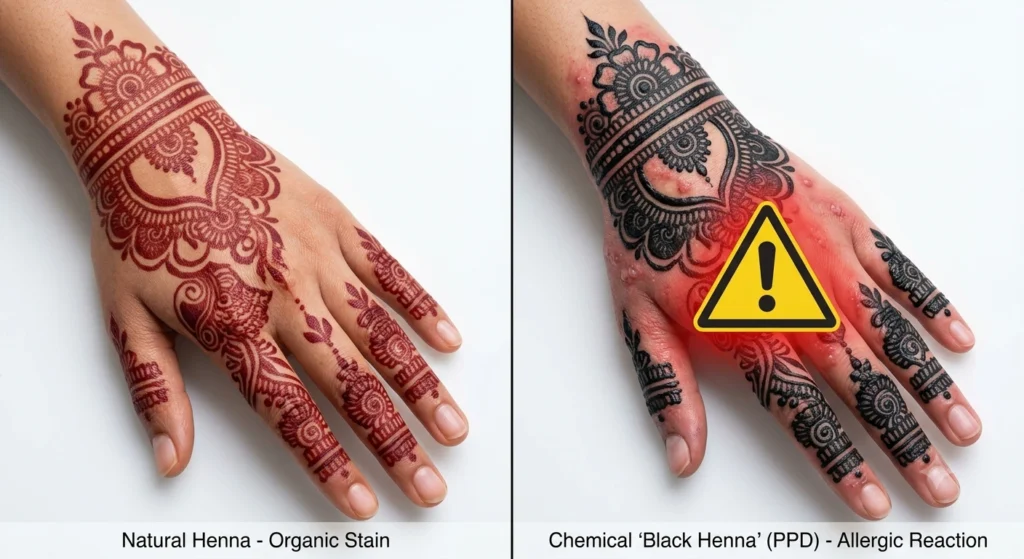
Mehndi has been an integral part of South Asian culture for centuries. In fact, it is deeply rooted in our wedding traditions, religious festivals, and family celebrations. However, a new trend has taken over in recent years – Black Mehndi.
On one hand, black mehndi promises a darker, quicker stain and looks stunning in photographs. On the other hand, it comes with serious health risks that most people do not know about. Moreover, these risks can cause permanent skin damage. Therefore, this comprehensive guide will compare Black Mehndi vs Natural Mehndi on the basis of safety, ingredients, color, longevity, and skin impact.
Furthermore, we will also share expert tips on how to identify fake mehndi in the market. Additionally, we will explain why natural mehndi is always the better choice. By the end of this article, you will know exactly which one to pick for your next occasion. So, let’s get started!
What is Natural Mehndi?
Natural Mehndi, also known as Red Henna, comes from the dried leaves of the Lawsonia inermis plant. Specifically, manufacturers grind the leaves into a fine powder. Then, they mix them with natural ingredients like water, lemon juice, and essential oils (such as eucalyptus or tea tree oil) to create a paste. Consequently, this paste is 100% herbal and chemical-free.
Key Features of Natural Mehndi:
- Color: It gives a reddish-brown to deep maroon stain.
- Ingredients: It contains 100% herbal and chemical-free components.
- Smell: It releases an earthy, grassy, and herbal fragrance.
- Safety: It is completely safe for all skin types, including children and pregnant women.
- Development: The stain starts orange and darkens over 24-48 hours.
Moreover, natural mehndi has medicinal properties. For example, it has cooling effects that help relieve stress and headaches. Additionally, it strengthens nails and conditions hair naturally. Furthermore, it is eco-friendly and biodegradable. Therefore, choosing natural mehndi benefits both your skin and the environment.
What is Black Mehndi?
Black Mehndi is NOT real henna. In reality, a synthetic mixture contains a chemical called PPD (Para-Phenylenediamine) along with other industrial dyes. Consequently, this mixture produces an instant jet-black color. Unfortunately, marketers often sell it as “Black Henna” to mislead customers. As a result, many people unknowingly apply dangerous chemicals to their skin.
Key Features of Black Mehndi:
- Color: It gives a jet black or dark blue-black stain.
- Ingredients: It contains PPD, kerosene, and other chemical solvents.
- Smell: It emits a strong, pungent, and chemical-like odor.
- Safety: It carries a high risk of allergic reactions, burns, and permanent scarring.
- Development: The stain appears almost instantly (within 1-2 hours).
However, these quick results come at a cost. In fact, the chemicals in black mehndi can cause severe skin damage. Therefore, many countries have banned it for direct skin application. Moreover, dermatologists strongly warn against using it. Consequently, you should avoid black mehndi at all costs.
Black Mehndi vs Natural Mehndi: The Ultimate Comparison Table
| Parameter | Natural Mehndi (Red Henna) | Black Mehndi (Chemical Dye) |
|---|---|---|
| Source | Manufacturers derive it from Henna plant leaves | Companies produce it from synthetic chemical mixture (PPD + Dyes) |
| Color Outcome | It gives a reddish-brown to Maroon color | It produces a Jet Black (unnatural look) |
| Time to Develop | It takes 24–48 hours to darken | It develops within 1–2 hours |
| Skin Safety | It is 100% Safe and Hypoallergenic | It carries a high risk of burns, blisters, and scars |
| Allergic Reaction | It causes extremely rare reactions | It very commonly causes redness, itching, and swelling |
| Longevity | It lasts 1–3 weeks and fades naturally | It lasts 3–4 weeks but fades unevenly |
| Smell | It smells earthy and herbal | It smells pungent and chemical-like |
| Hair Use | People safely use it for natural hair coloring | It damages hair shaft and causes breakage |
| Cost | It costs ₹50 – ₹500 (affordable) | It costs more due to chemical processing |
| Legal Status | FDA has approved it for cosmetic use | Many countries have banned it for skin use |
As you can see, the differences are massive. Moreover, the safety concerns alone make natural mehndi the clear winner. Furthermore, natural mehndi is more affordable. Therefore, it is the smarter choice for everyone.
Why is Black Mehndi Dangerous? (The Dark Truth)
The primary culprit in Black Mehndi is PPD (Para-Phenylenediamine). To begin with, manufacturers legally use this chemical in hair dyes. However, they strictly prohibit it for direct application on the skin in high concentrations. Consequently, using black mehndi on your skin is extremely risky.
Side Effects of Black Mehndi:
- Chemical Burns: It causes blisters and open wounds on the skin.
- Permanent Scarring: Deep burns can leave lifelong marks.
- Allergic Contact Dermatitis: It triggers severe itching, redness, and swelling.
- Kidney & Liver Damage: The skin can absorb it in large quantities and harm internal organs.
- Cross-Sensitivity: If you develop an allergy to PPD, you may also become allergic to certain antibiotics, sunscreens, and even black clothes dye.
⚠️ Warning: Never apply Black Mehndi on children. This is because their skin is thinner and absorbs chemicals faster. As a result, they are more likely to experience severe reactions. Moreover, children’s developing bodies are more vulnerable to chemical toxicity.
Furthermore, even if you do not have an immediate reaction, the chemicals can build up in your system over time. Consequently, you might develop allergies later in life. Therefore, it is always better to stay safe and choose natural mehndi.
Benefits of Choosing Natural Mehndi
If you are still confused about Black Mehndi vs Natural Mehndi, here are 5 solid reasons to go natural:
- Safe for Everyone: From babies to grandparents, everyone can use it.
- Medicinal Properties: Natural mehndi has cooling properties that relieve stress and headaches.
- Beautiful Fade: It fades naturally into a beautiful caramel color, not into an ugly greyish patch.
- Nail & Hair Health: It strengthens nails and conditions hair naturally.
- Eco-Friendly: It is 100% biodegradable and causes zero environmental harm.
In addition, natural mehndi is deeply connected to our traditions. For instance, people use it in weddings, Eid, Karva Chauth, and other festivals. Therefore, choosing natural mehndi is not just safe – it is also culturally authentic. Moreover, it gives a more natural and elegant look. Consequently, brides and mehndi artists prefer it for special occasions.
How to Identify Fake / Black Mehndi in the Market?
Before buying, perform these simple tests to identify whether it’s Natural Mehndi or Black Mehndi:
| Test | Natural Mehndi | Black Mehndi |
|---|---|---|
| Smell Test | It smells like dry grass/hay | It smells like paint or kerosene |
| Color of Powder | It has an olive green to light brown color | It has a dark grey to charcoal black color |
| Mix Test | When you mix it with water, the paste turns brownish | When you mix it with water, the paste turns inky black |
| Stain Test | It starts orange and turns maroon in 48 hrs | It turns black immediately after removal |
| Ingredient List | It contains only Lawsonia inermis | It contains PPD, Benzene, or Kerosene |
Additionally, always buy from trusted brands. For example, look for organic certification or herbal product labels. Similarly, avoid street vendors who sell cheap, unbranded mehndi cones. Furthermore, check the manufacturing date and expiry date. Consequently, you will ensure that you are buying authentic natural mehndi.
Expert Tips for Applying Natural Mehndi
To get the darkest natural stain, follow these pro-tips:
- Clean Skin: Wash your hands with soap to remove oil.
- Use Clove Oil: Add a few drops of clove oil to the paste for a darker stain.
- Sugar + Lemon Sealant: Apply a sugar-lemon mixture over the dried mehndi to lock the color.
- Heat: Apply mild heat (like sitting in the sun) to enhance the color.
- Patience: Leave the mehndi for at least 6–8 hours. Do NOT wash it off with water immediately. Scrape it off gently.
Moreover, avoid washing your hands with soap for the first 12 hours. Similarly, stay away from water as much as possible during this time. Additionally, apply a mixture of sugar and lemon juice on the dried mehndi to intensify the stain. As a result, your mehndi stain will become much darker and last longer. Furthermore, the color will deepen beautifully over 48 hours.
Frequently Asked Questions (FAQs)
1. Can Black Mehndi turn into Natural Mehndi over time?
No. Once you apply Black Mehndi, the chemical reaction changes the skin’s protein structure. As a result, the black stain will fade, but it will never turn into a natural reddish-brown color. Therefore, you should never use it if you want a natural look.
2. Is Black Mehndi allowed in Islam or Hindu traditions?
Traditionally, both religions recommend natural red henna. However, black mehndi is considered an imitation and is often discouraged because it alters the natural creation (changing the skin color artificially). Moreover, religious scholars advise against using harmful chemicals on the body.
3. How long does Natural Mehndi last?
It lasts between 1 to 3 weeks, depending on your skin type, aftercare, and body heat. Furthermore, the stain is darkest on the palms and fades quicker on the back of the hands. Additionally, proper aftercare can extend its longevity.
4. What should I do if I get a reaction from Black Mehndi?
Immediately, wash the area with soap and water. Then, apply a cold compress and take an antihistamine. If blisters form, visit a dermatologist urgently. Moreover, do not scratch or pop the blisters, as this can cause permanent scarring.
5. Can I mix Black Mehndi with Natural Mehndi?
Absolutely not. Mixing them does not make it “safe.” In fact, it only dilutes the PPD but does not eliminate the risk of an allergic reaction. Therefore, you should never mix them together. Consequently, always use 100% natural mehndi.
Conclusion: Which One Wins?
In the battle of Black Mehndi vs Natural Mehndi, the winner is clear – Natural Mehndi wins by a landslide.
While Black Mehndi might give you that “Instagram-worthy” dark look instantly, it comes with dangerous side effects that can ruin your skin permanently. On the other hand, Natural Mehndi may take a little longer to develop, but it is safe, beautiful, and deeply rooted in our traditions. Furthermore, it is more affordable and eco-friendly. Therefore, the choice is obvious.
So, the next time you apply mehndi, choose wisely. Remember: Sundarta ke liye nahi, suraksha ke liye Natural Mehndi chunein! (Choose Natural Mehndi for safety, not just beauty!) After all, your skin deserves the best care. Consequently, always prioritize natural over chemical products.