
Introduction
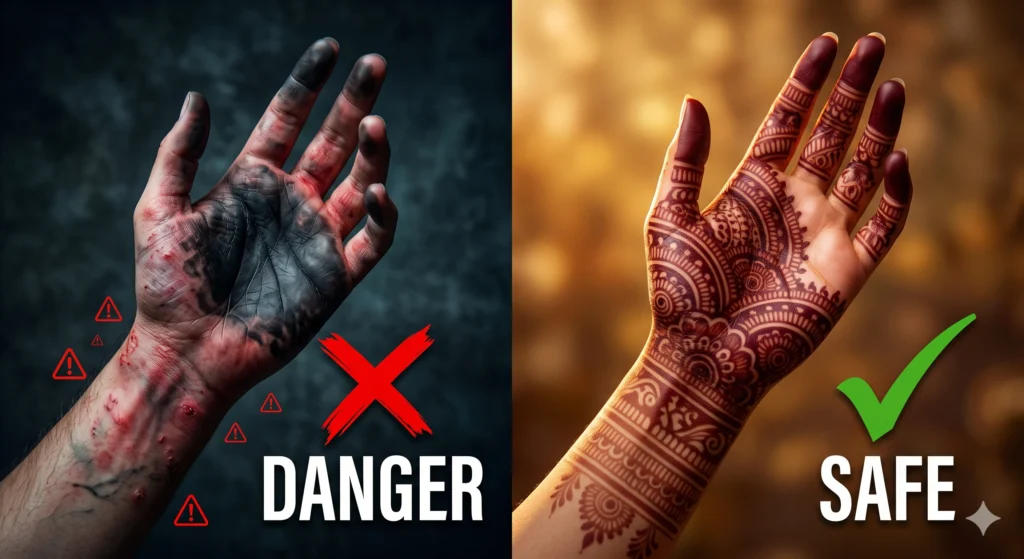
Mehndi is an essential part of every Indian wedding, festival, and celebration. But did you know that the mehndi you apply could be dangerous for your skin? Many people unknowingly opt for chemical mehndi (also known as black henna) thinking it will give them a darker, faster stain. However, this choice can lead to severe skin reactions, allergies, and even permanent scars.
On the other hand, natural henna has been used for centuries and is completely safe for all skin types. It gives a beautiful deep maroon stain without any side effects.
In this comprehensive guide, we will compare chemical mehndi vs natural henna and help you understand why natural henna is always the safer choice. We’ll cover the dangers of chemical mehndi, the benefits of natural henna, how to identify fake mehndi, and answer all your questions.
👉 For your special day, always trust experts who use 100% natural henna products. Book our professional bridal mehndi service for safe and stunning designs.
What is Chemical Mehndi (Black Henna)?
Chemical mehndi, commonly called black henna, is not actually henna at all. It is a mixture of synthetic dyes and harmful chemicals, primarily PPD (Paraphenylenediamine). PPD is a chemical commonly used in hair dyes and industrial products.
Key Characteristics of Chemical Mehndi:
- Dark black color – appears instantly
- Smells like chemicals – pungent, ammonia-like odor
- Quick stain – darkens within 1-2 hours
- Smooth, sticky paste – unnatural texture
- Often labelled as “black henna” – misleading marketing
👉 Always ask your artist about the ingredients. Our engagement mehndi artists use only natural, chemical-free henna.
What is Natural Henna?
Natural henna comes from the leaves of the Lawsonia inermis plant. The leaves are dried and ground into a fine greenish-brown powder. When mixed with natural ingredients like water, lemon juice, and essential oils, it creates a paste that stains the skin naturally.
Key Characteristics of Natural Henna:
- Greenish-brown powder – natural color
- Earthy smell – like dried leaves or hay
- Slow oxidation – stain appears orange then darkens to maroon
- Natural texture – slightly grainy, not sticky
- Safe for all skin types – no chemicals or additives
Chemical Mehndi vs Natural Henna: 7 Key Differences
Here are the 7 major differences between chemical mehndi and natural henna:
| Feature | Chemical Mehndi (Black Henna) | Natural Henna |
| Color | Black, dark grey | Deep maroon, reddish-brown |
| Stain Time | Instant (1-2 hours) | Slow (24-48 hours for full color) |
| Ingredients | PPD, synthetic dyes, chemicals | Lawsonia inermis plant, natural oils |
| Smell | Chemical, pungent, ammonia-like | Earthy, herbal, natural |
| Safety | Dangerous – causes allergies, burns | Completely safe for all skin types |
| Skin Effect | Irritation, rashes, blisters, burns | Cooling, soothing, moisturizing |
| Longevity | Fades quickly with peeling | Lasts 1-3 weeks naturally |
5 Dangers of Chemical Mehndi You Must Know
1. Skin Allergies & Contact Dermatitis
PPD is a strong allergen. When applied to the skin, it can cause contact dermatitis – symptoms include redness, itching, swelling, and blisters. In severe cases, it can lead to permanent skin damage and scarring.
2. Chemical Burns
Chemical mehndi often contains high concentrations of PPD and other corrosive substances. These can cause chemical burns on the skin, leaving behind painful wounds and permanent scars.
3. Permanent Scarring
Once the skin is damaged by chemical mehndi, the scars can last for months or even years. In some cases, the damage is permanent and requires medical treatment.
4. Eye Damage
If chemical mehndi paste enters the eyes, it can cause severe eye damage, including corneal burns, vision problems, and in extreme cases, blindness.
5. Long-term Health Risks
Prolonged exposure to PPD has been linked to respiratory issues, hormonal imbalances, and even cancer in some studies. This is why many countries have banned PPD in cosmetic products.
👉 For your safety and peace of mind, always choose premium mehndi services across India that use only natural, chemical-free henna.
5 Benefits of Natural Henna You Should Know
1. 100% Safe for All Skin Types
Natural henna has been used for over 5,000 years without any side effects. It is completely safe for children, pregnant women, and people with sensitive skin.
2. Natural Cooling Effect
Henna leaves have natural cooling properties. When applied to the skin, it reduces body heat and provides a soothing, calming effect – perfect for summer weddings!
3. No Side Effects
Unlike chemical mehndi, natural henna does not cause any rashes, itching, burns, or allergies. It is gentle on the skin and leaves it feeling soft and moisturized.
4. Beautiful Deep Maroon Stain
Natural henna gives a rich, deep maroon stain that develops over 24-48 hours. The color is natural, glowing, and long-lasting.
5. Antifungal & Antibacterial Properties
Henna leaves have natural antifungal and antibacterial properties. It protects the skin from infections and keeps it healthy.
👉 Read our guide on mehndi aftercare tips for long-lasting stain to get the darkest color from natural henna.
How to Identify Chemical Mehndi vs Natural Henna
| Identification Test | Chemical Mehndi | Natural Henna |
| Smell Test | Strong chemical, pungent | Earthy, herbal |
| Color Test | Dark black paste | Greenish-brown paste |
| Stain Test | Instant black stain | Orange stain that darkens over time |
| Skin Test | Burning/itching sensation | Cooling, soothing effect |
| Label Test | “Black Henna”, “Instant Mehndi” | “100% Natural Henna” |
FAQs: Chemical Mehndi vs Natural Henna
Q1: Is black henna safe for your skin?
No, black henna (chemical mehndi) is extremely dangerous. It contains PPD which can cause severe allergies, burns, and permanent scarring.
Q2: How can I tell if mehndi is natural or chemical?
Natural henna has an earthy smell, greenish-brown color, and takes 24-48 hours to darken. Chemical mehndi has a pungent chemical smell, black color, and stains instantly.
Q3: Why does natural henna take longer to stain?
Natural henna releases its dye slowly through oxidation. It takes 24-48 hours for the full dark maroon color to develop. Chemical mehndi uses artificial dyes that stain instantly.
Q4: Can chemical mehndi cause permanent damage?
Yes, chemical mehndi can cause permanent scarring, skin discoloration, and in severe cases, long-term health issues.
Q5: Where can I get safe, natural mehndi services?
Always choose professional artists who use 100% natural henna. Explore our bridal mehndi packages for safe, chemical-free designs.
The Safe Alternative: Why Choose Natural Henna
The choice between chemical mehndi vs natural henna is clear. Natural henna is safe, beautiful, and traditional. Chemical mehndi is dangerous, harmful, and unnecessary.
Here’s what you should do:
- Always ask your artist about the ingredients they use.
- Test a small patch of henna on your skin before full application.
- Check the color and smell – if it’s black or smells like chemicals, refuse it.
- Book professional services that guarantee 100% natural henna.
👉 Ready to book your dream mehndi? Our bridal mehndi packages use only 100% natural henna for safe, stunning, and long-lasting designs.
Conclusion
Your wedding day is one of the most important days of your life. Don’t let chemical mehndi ruin it with skin allergies, burns, or permanent scars. Always choose natural henna for a safe, beautiful, and traditional mehndi experience.
Natural henna is not just a tradition – it’s a safe choice for your skin and health. The beautiful deep maroon stain, cooling effect, and zero side effects make it the only choice for brides, grooms, and families.
So the next time someone offers you “black henna” or “instant mehndi,” remember – if it’s black, send it back!